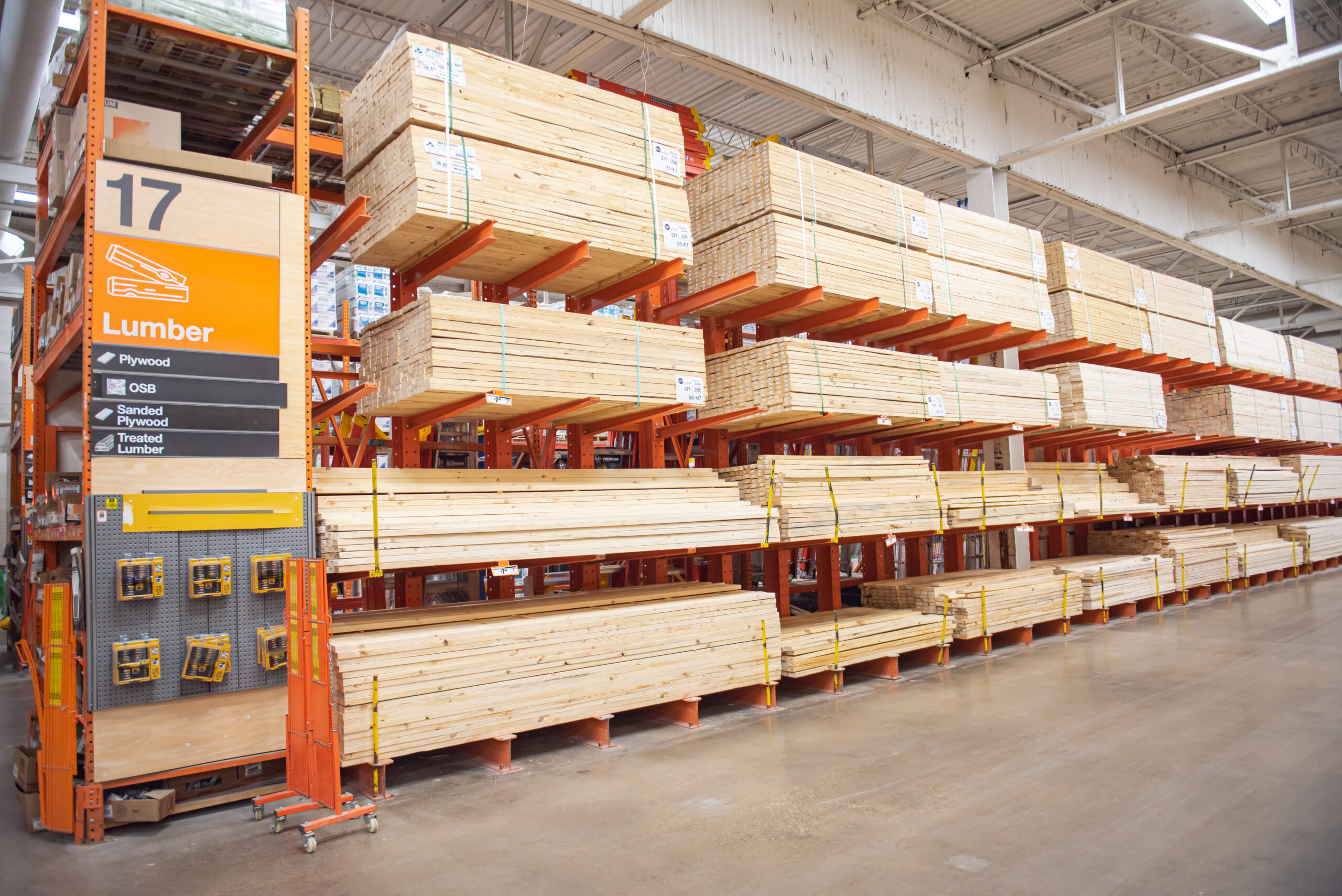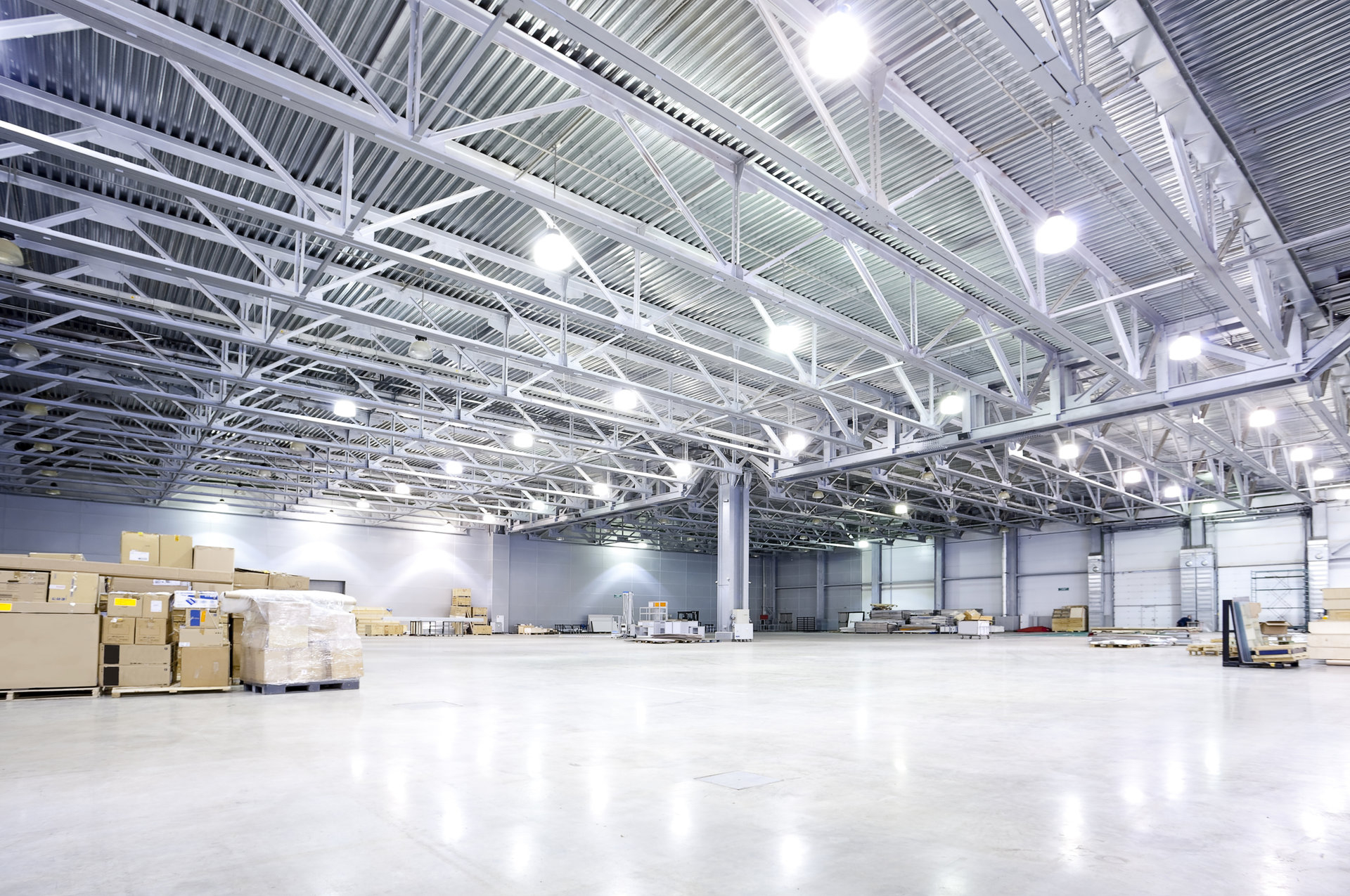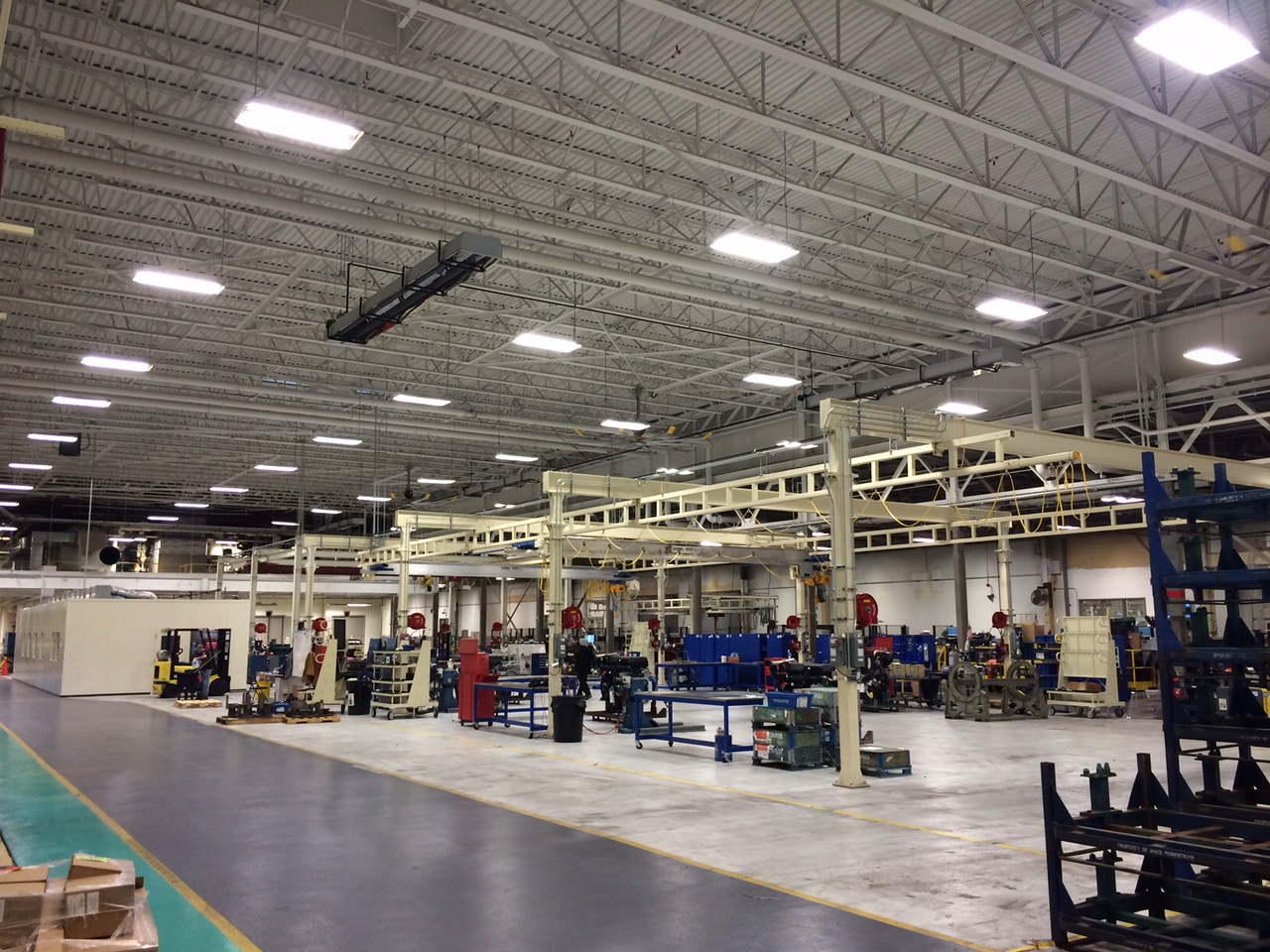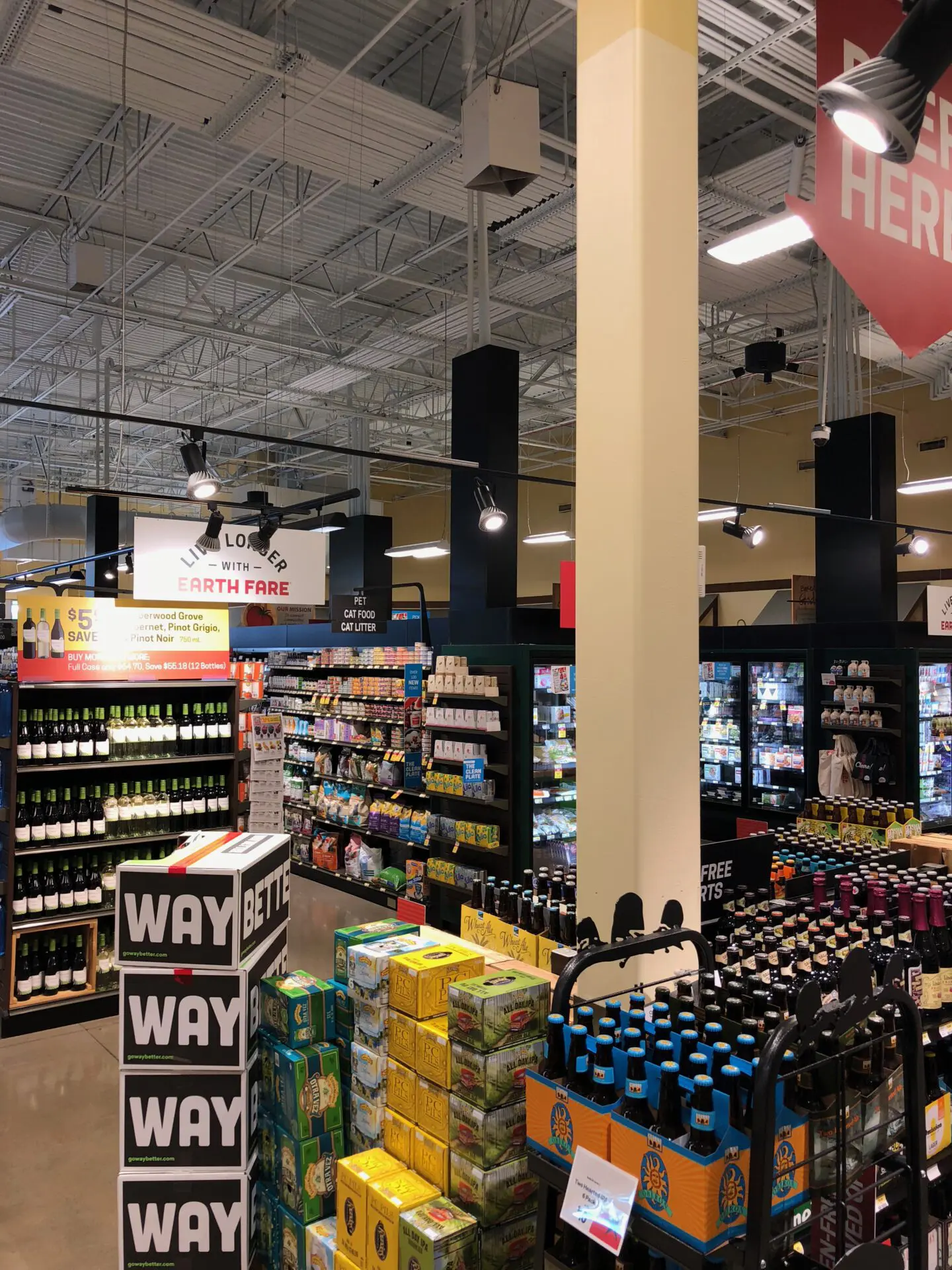


In the competitive world of retail ensuring customer safety is just as vital as maintaining efficient operations and a pleasant shopping experience. Among the many risks that supermarkets, big-box stores, convenience stores, and other retail establishments face, slip and fall accidents stand out. These incidents can be costly – not only for the human cost of injury, but for the significant financial implications. From moderate sprains and strains to severe fractures or spinal injuries, a single incident can lead to six or seven-figure settlements, rising insurance premiums, legal fees, and reputational damage.
The Hidden Link: Air Stratification, Condensation, and Slip Hazards
One often-overlooked contributor to slip and fall hazards is condensation that forms on cooler or freezer doors and then drips onto the floor. If the doors are a lower temperature than the surrounding air temperature, the moisture from the warmer air will condense on the cold surface of the cooler/freezer doors. Some operations reduce the ambient temperature to lower the air’s dew point below the surface temperature of cooler or freezer doors, minimizing the risk of condensation. While this approach is effective at preventing moisture buildup, it often results in an uncomfortably cold environment, and higher HVAC related costs.
This is where Air-Row destratification fans offer a simple yet powerful solution. By actively mixing warm air from high ceilings with cooler air at floor level, these fans help maintain consistent temperatures, minimize moisture buildup, and reduce wet spots that lead to dangerous slips. Below, we’ll explore how destratification fans work, why they matter for retail safety, and the tangible benefits they deliver.
How Destratification Fans Work
As cold air is introduced into a space, warmer air naturally rises toward the ceiling, leading to a condition known as indoor air stratification. This uneven temperature distribution can reduce comfort and increase energy consumption. Air-Row destratification fans address this issue by circulating the air to maintain a consistent temperature throughout the space.
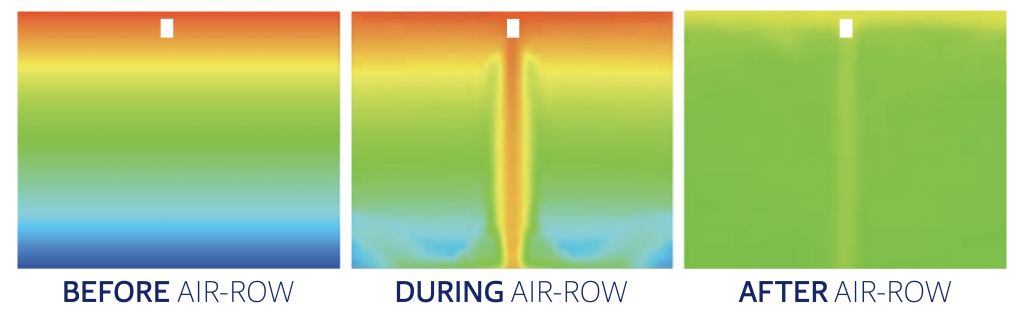
Air-Row destratification fans are designed to:
- Circulate Air Vertically
Mounted near the ceiling, the fan draws the warm air layer down and gently pushes it toward the floor at a slow, narrow angle. - Blend Temperature Layers
As the warm air descends, it mixes with cooler floor-level air, creating a more uniform ambient temperature from floor to ceiling. - Reduce Condensation Points
Warming the air increases the gap between the dry bulb and dew point temperatures, providing a buffer that prevents immediate condensation on cold surfaces. With the fans circulating the air, it is no longer stagnant, so it doesn’t stay in contact with cold surfaces long enough for condensation to form.
Unlike high-speed fans that generate noise and uncomfortable drafts, Air-Row destratification fans operate quietly and provide a smooth, continuous airflow—ideal for retail spaces where maintaining customer comfort is essential.
Benefits for Slip and Fall Prevention

Minimized Floor Moisture
By addressing the root cause of condensation, these fans drastically reduce wet spots in front of entrances, around coolers, and under skylights—areas statistically prone to slip incidents.
Enhanced Customer Comfort and Safety
Uniform temperature zones eliminate cold drafts near the floor, reducing sudden temperature differentials. Because of this, floors stay dry and customers are more comfortable as they move between sections.
Lower Incident Rates, Lower Costs
Fewer slip/fall accidents translate directly to:
- Reduced legal settlements (often ranging from $10,000 for minor sprains to over $1 million for severe injuries).
- Decreased out-of-pocket legal defense fees.
- Stabilized liability insurance premiums.
Energy Savings (Additional Win)
Beyond safety, destratification fans help retailers trim heating and cooling bills by keeping conditioned air in the occupied zone. Many stores see a 5–15% reduction in HVAC costs—funds that can be reinvested in further safety or customer-experience initiatives.
Ideal Retail Applications
Supermarkets & Grocery Chains
High ceilings and multiple coolers make grocery aisles prime areas for condensation. Destratification fans help maintain dry floors near refrigerated displays.
Big-Box Stores
Vast open areas with skylights and high racking benefit from balanced temperatures to prevent moisture accumulation around glass storefronts in big-box stores.
Convenience Stores & Small Retailers
Even smaller footprints like convenience stores see fewer wet entrance mats and drier vestibules, enhancing first impressions and safety. Drips from refrigerated displays will also be eliminated, keeping customers safe while they shop.
Warehouse-Style Outlets
In spaces where forklifts and pallet jacks operate, dry—and therefore non-slippery—floors are critical for both customer and employee safety.
Implementation Tips
Assess Your Ceiling Height
Air-Row units are ideal for ceilings from 12 ft to 60 ft. Choose a model sized for your floor area and ceiling height.
Strategic Placement
Install fans above high-risk zones: store entrances, refrigerated aisles, and glazed openings.
- Integrate with Controls
Pair destratification units with building management systems (BMS) or simple thermostats so they run only when needed, maximizing energy savings. - Annual Maintenance
Like all fans, keep blades dust-free and check mounting hardware annually to ensure quiet, reliable operation.
Conclusion
Slip and fall accidents can have serious consequences for retailers—ranging from customer injuries and lost trust to six-figure legal claims and elevated insurance costs. By tackling the environmental root cause of many wet-floor hazards, Air-Row destratification fans offer a proactive, energy-smart solution. They equalize air temperatures, dramatically reduce condensation, and help keep retail floors dry.
Whether you manage a bustling supermarket, a sprawling big-box warehouse, or a cozy convenience store, destratification technology is a simple addition that delivers clear dividends in safety, comfort, and cost savings. To learn more about selecting and installing the right Air-Row units for your space, visit Air-Row’s product catalog or contact us today.
KEY TERMS
Condensation
The process by which water vapor in the air changes into liquid water when it comes into contact with a surface at or below its dew point temperature. This often appears as water droplets on cold surfaces. Want to learn more about condensation? Visit National Geographic – Condensation
Dew Point
The temperature at which air becomes fully saturated with moisture (100% relative humidity) and water vapor begins to condense into liquid. A lower dew point indicates drier air; a higher dew point indicates more moisture in the air. For further explanation on dew point, visit the National Weather Service website.
Dry Bulb Temperature
The temperature of air measured by a standard thermometer, not affected by humidity. This is the “regular” air temperature you typically see in weather reports.
Wet Bulb Temperature
The lowest temperature that air can reach through the process of evaporation. It’s measured using a thermometer with a water-moistened wick and is influenced by humidity. Wet bulb temperature is crucial for understanding evaporative cooling and comfort levels.
Looking for a technical explanation of Dew Point, Dry Bulb Temperature, and Wet Bulb Temperature? The Engineering Toolbox has you covered.